Revitalizing a Decade-Old Design System. Master Template R&D: Turning Tech Debt into Innovation.
Master Template is the foundation behind Inkling’s drag-and-drop authoring experience, powering the functionality and branding for millions of frontline workers and learners worldwide. However, after a decade of iterations by many different designers, the codebase had accumulated significant technical debt, a sprawling backlog, and a critical disconnect from our core Product team.
This case study details my journey of taking full ownership of this legacy system. Rather than opting for a disruptive rebuild, I led a strategic, two-year initiative to meticulously modernize the codebase, champion accessibility, and bridge the gap between our design and engineering teams—proving that patient, systematic improvements can yield exponential value for both our customers and our internal workflow.
My Roles
- Senior UX Engineer / Front-End Designer
The Problem
A decade of technical debt and “too many cooks in the kitchen” left our core authoring tool clunky, undocumented, and disconnected from the core product.
The Outcome
Cleared 90% of the 5-year backlog, modernized the codebase with progressive CSS, and established a new standard for cross-functional collaboration.
Team
- Sr. Front-End Designer: Ted Boyer
- Sr. Content Strategist: Susan Sarratt
- Sr. Implementation Manager: Danette Ramirez
Work completed in 2022–2024 for Inkling
Master Template R&D
Constraints & Strategy
Choosing patient, systematic modernization over a disruptive rebuild.
Context. Inkling transformed the process of building device-responsive, branded, interactive content. Our team of three enabled customers to set up large-scale content libraries (on a scale of hundreds to thousands of digital books called Inkdocs.)
2 million frontline workers, students, and corporate learners have used our product to find what they needed in the flow of work.
Leading brands (McDonald’s, Whole Foods, McGraw Hill, ServiceNow) have relied on us as their industry training solution.
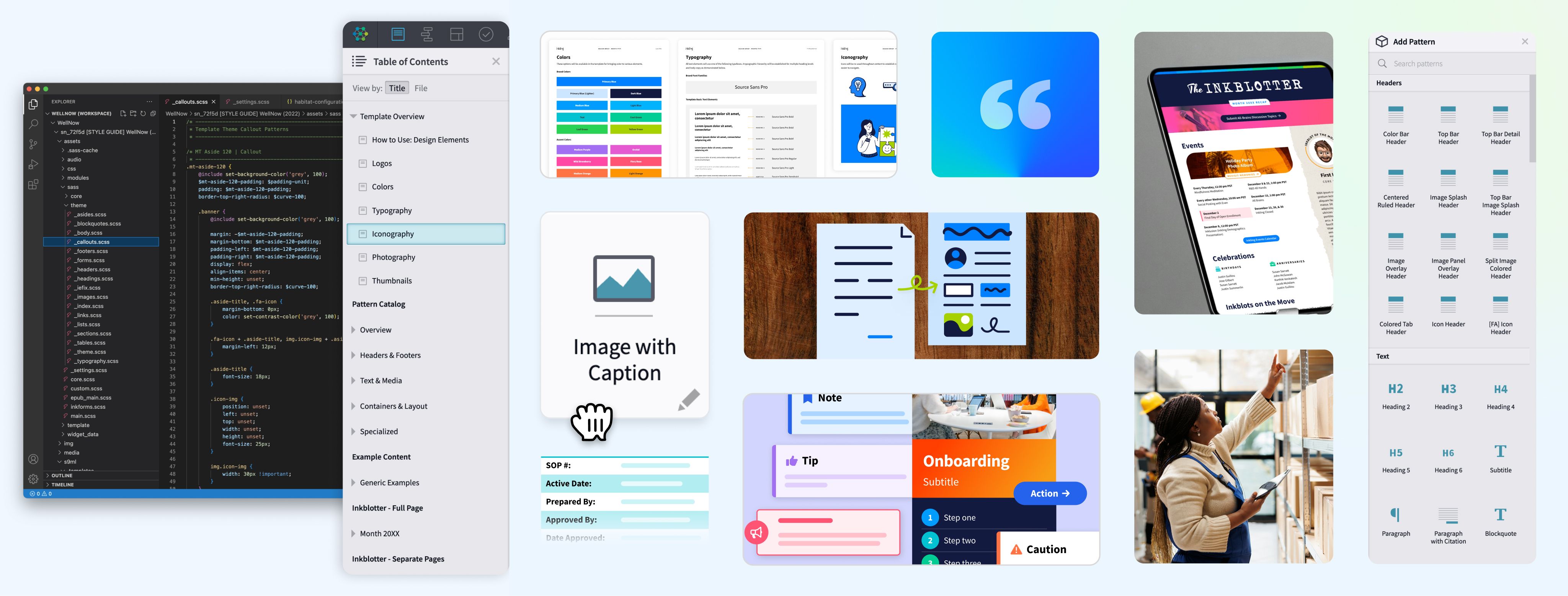
Background. Master Template powered our drag-and-drop patterns, functionality, and branding. It determined how content looked and worked for everyone who used our platform. In the implementation process, this boilerplate approach let designers reuse what worked well, accelerating development.
Constraints. When I took ownership, we faced several challenges:
- Many cooks in the kitchen: Dozens touched the patterns and code along Inkling’s history, without regard to structured documentation or development principles.
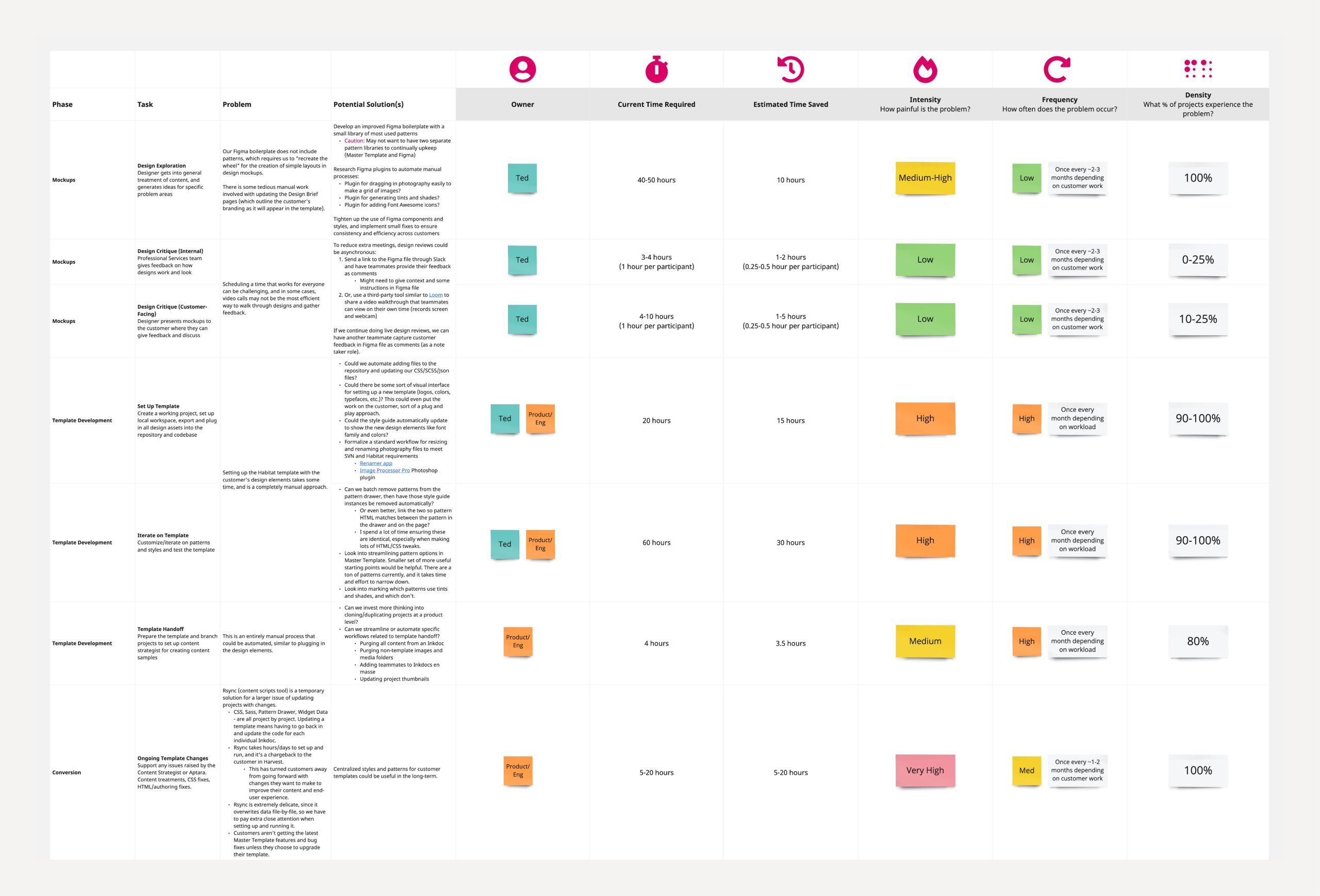
- Substantial backlog: 80+ issues accumulated over five years, needing time and research to fix. Tickets comprised of bugs, ideas for improvement, and long-term upgrades, needing more detail, time estimates, and logical groupings.
- Sporadic dedicated time: With heavy customer workloads, there often wasn’t enough time in the year to dedicate fully to R&D.
- Poor integration with Product: Historically, Master Template and the Product side hadn’t interacted enough to inform each other of their priorities. This had led to half-baked workarounds and a lack of support for research and building new features.
Early fork in the road. After becoming well-versed in how we built our templates, I set out to take the helm of our R&D process. Instead of opting to start fresh and build an entirely new codebase, I began with small improvements to the comprehensive yet clunky code that already existed.
For example, I chose to modernize incrementally: triaging the backlog with greater detail, progressively enhancing existing features, and building bridges with Product and Engineering along the way.
This was a successful choice because it allowed me to carefully understand previous decisions and iterate within my limited capacity for R&D.
Meticulous improvements. In my first year, I gained deep familiarity and confidence using the codebase through customer implementations. With each new customer template, I identified any bug fixes or new patterns for inclusion in Master Template.
I partnered with our team to test and vet each new feature, which ensured all future customers benefitted from my learnings and had access to the latest and greatest of my design solutions.
Execution & Leadership
Taking full accountability for the codebase and bridging design and engineering.
Ownership. When my design teammate moved to another team, I changed my approach to lead the entire codebase, processes, documentation, and training. At this stage, I established weekly meetings with my team to share sprint progress, get feedback, and solicit QA testing needs. I also partnered with a PM to evolve our integration with Product and Engineering.
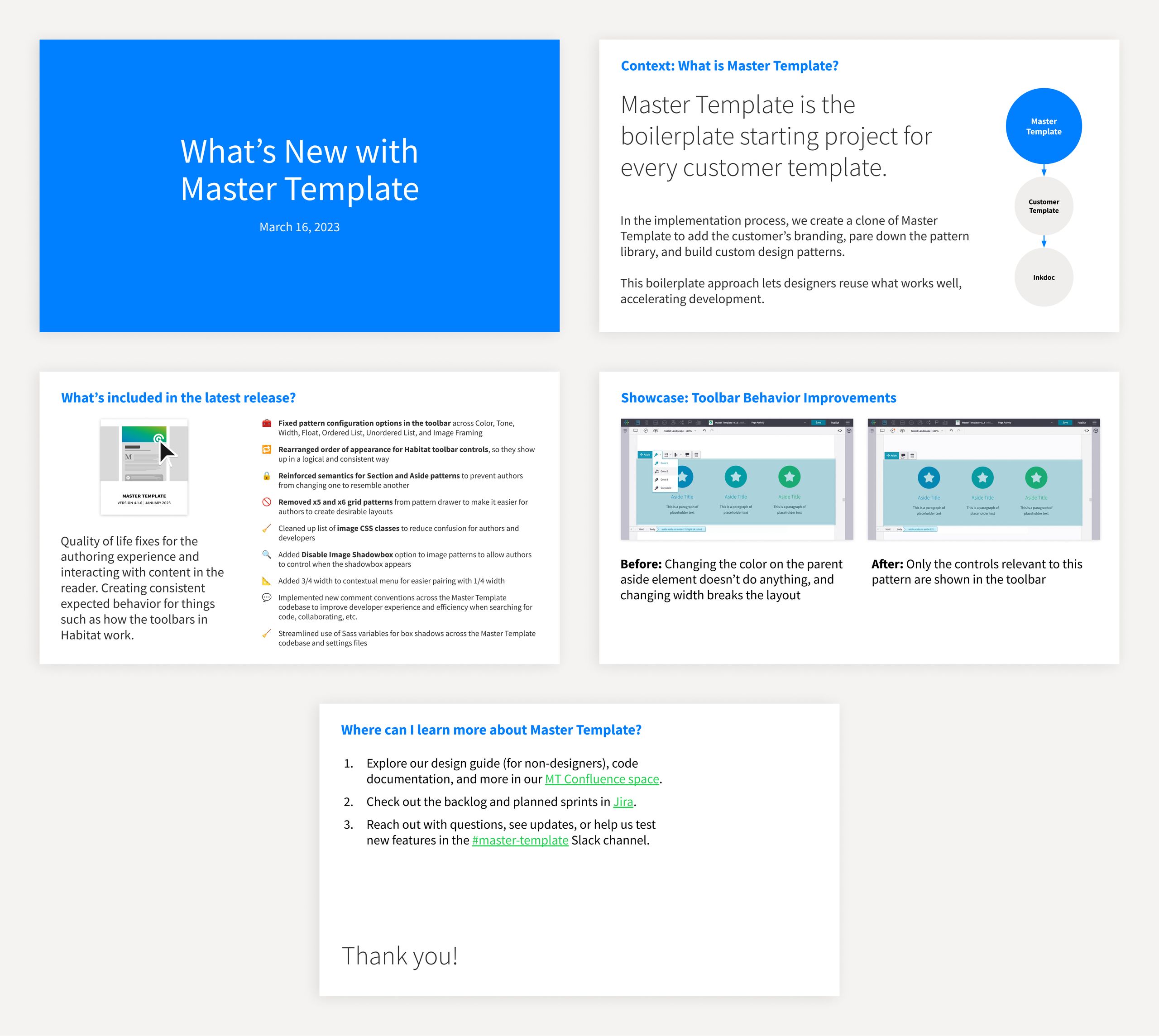
- Released six new versions of Master Template within two years, including substantial authoring/user interaction fixes
- Took full accountability for the codebase, processes, documentation, and training/company outreach
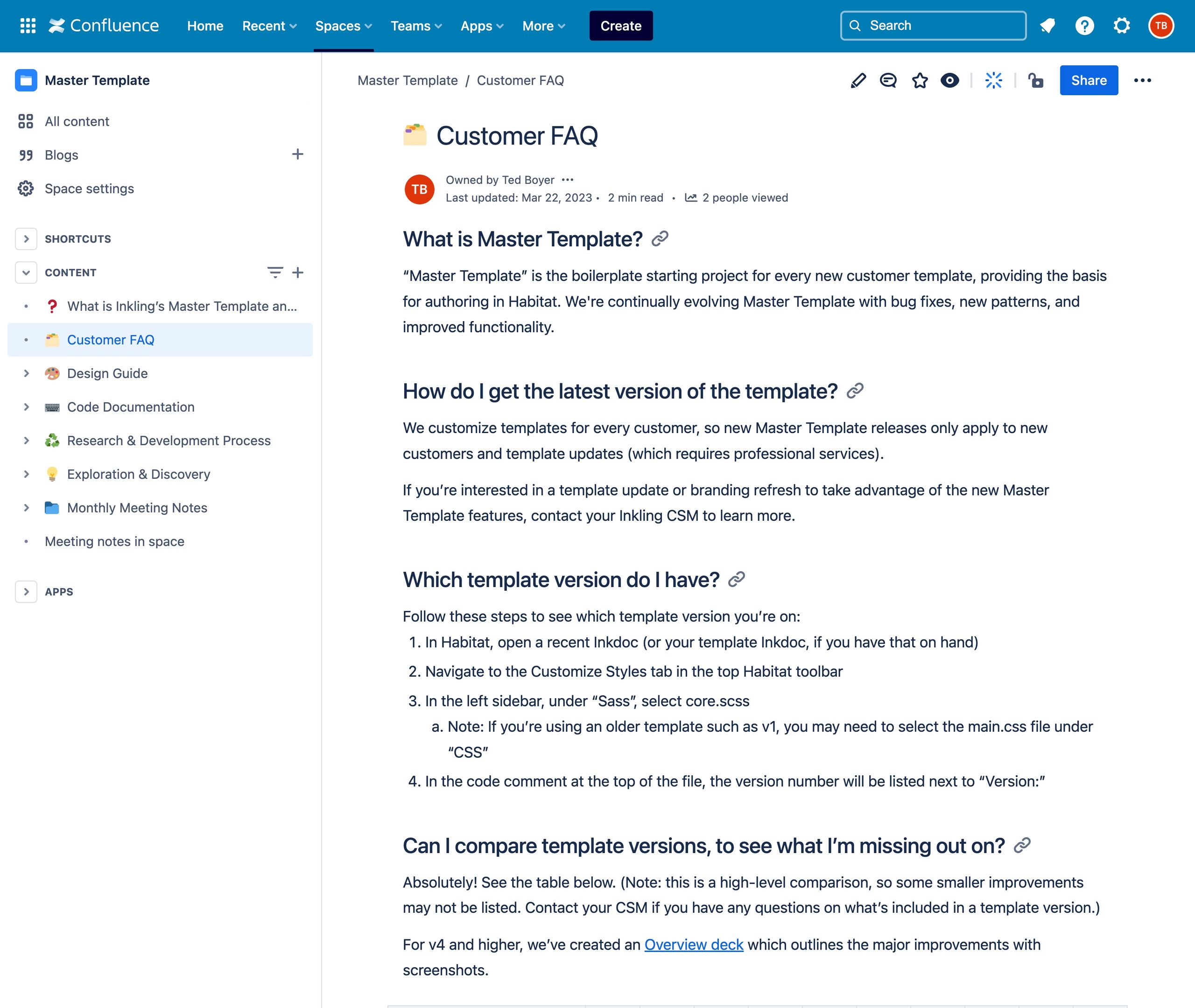
- Recorded detailed monthly meeting notes, including goals, topics, action items, and decisions
- Led strategic planning & roadmapping, which informed long-term goals: Now, Next, Later (within 3-5 years)
- Developed a holistic user-centered mindset: Optimizations impact developers (DX), authors (AX) & learners
- Began knowledge sharing: Enabled Customer Success, Support, and Leadership, increasing team visibility
- Gained deep familiarity and confidence with Master Template and our process in general
Cross-functional partnership. Before I moved into a fully hybrid UX and front-end role, I met regularly with a Product Manager each month to voice excitement & concerns, share progress on our respective initiatives, and support each other. It was useful to stay informed on the product roadmap, which was previously obscured from our team. I also resolved product- and platform-level questions through our partnership, which supported me in completing R&D issues.
Beyond this 1:1 collaboration, I involved other departments like UX and Engineering to provide feedback, gather knowledge (e.g., accessibility and screen readers), and learn about opportunities. Staying in sync proved crucial as more product features continued to be developed and released.
Results & Value
Unlocking innovation for our customers and our internal workflow.
- 6 new versions
- released and documented over 2 years, including substantial authoring/user interaction fixes and new features
- ~90%
- reduction of original backlog over 2 years (70+ issues completed), unlocking our ability to innovate
- 100+
- unused patterns identified and removed to speed up development
Results. Over two years, I reduced our original backlog by 90%, prioritized writing release notes for each new version, triaged new issues with greater detail, and shared materials to enable both customers and Inkling.
For many new patterns and improved functionality on existing ones, I took advantage of newly available CSS like :has() and aspect-ratio to progressively enhance current features and reduce the amount of code written. I also identified and removed over 100 unused patterns from the codebase to speed up development and implementation tasks.
And by completing and implementing a full accessibility audit of our pattern library, I ensured compliance for legal and UX, not to mention a better user experience for all.
My work has unlocked our ability to innovate and has ensured happier customers. This breakthrough integration between Master Template, Product, and Engineering teams has also resulted in new initiatives, e.g. content import, as I have since taken on new responsibility leading UX design for the entire product.